
ANSWERS
Is snoring genetic?
Partly. Genes explain some of it, and most of what makes snoring louder can still be changed.
Key study
Snoring in twins
- 1,560 twin pairs
- Men, average age 74
- Questionnaires
Researchers compared identical and non-identical male twins from a US veterans registry. 26% were habitual snorers. Genetic factors accounted for about 23% of the variation in self-reported snoring, 40% of daytime sleepiness and 64% of obesity. The genetic influence on snoring and sleepiness was largely independent of the genes linked to obesity.
In 272 people from 50 families, people with one relative who had a symptom like habitual snoring, breathing pauses or daytime sleepiness were about 1.4 to 1.5 times as likely to have it themselves, and the odds rose with more affected relatives, even after allowing for weight 2.
What is inherited
Families share the shape of the jaw and face, the size of the airway, the tendency to put on weight around the neck, and even habits like evening drinking. Some of that is fixed; much of it isn't.
What you can still change
Even if snoring runs in your family, side sleeping, less alcohol, a clear nose, throat exercises and, for a small or set-back jaw, an anti-snore mouthguard can all help.
Is snoring hereditary?
Partly. Genes explained about a quarter of the differences in snoring in a large twin study 1.
If my parents snore, will I snore?
You're more likely to, but it isn't certain. Having snoring relatives raised the odds modestly in a family study 2.
Is sleep apnea genetic?
Symptoms of sleep apnea cluster in families, independent of weight 2. If it runs in your family and you snore loudly, mention it to your doctor.
Can you stop genetic snoring?
You can't change your genes, but you can change most of the things that make snoring louder.
Sources
- Carmelli D, Bliwise DL, Swan GE, Reed T. Genetic factors in self-reported snoring and excessive daytime sleepiness: a twin study. Am J Respir Crit Care Med. 2001;164(6):949-952. doi.org/10.1164/ajrccm.164.6.2012001
- Redline S, Tosteson T, Tishler PV, Carskadon MA, Millman RP. Studies in the genetics of obstructive sleep apnea: familial aggregation of symptoms associated with sleep-related breathing disturbances. Am Rev Respir Dis. 1992;145(2 Pt 1):440-444. doi.org/10.1164/ajrccm/145.2_Pt_1.440
COMING SOON
Snore less.
Find what works.
Snores measures your snoring every night, suggests which remedies to try, guides a few minutes of throat exercises a day and shows which changes go with quieter nights for you. The sound stays on your iPhone.
Meet Snores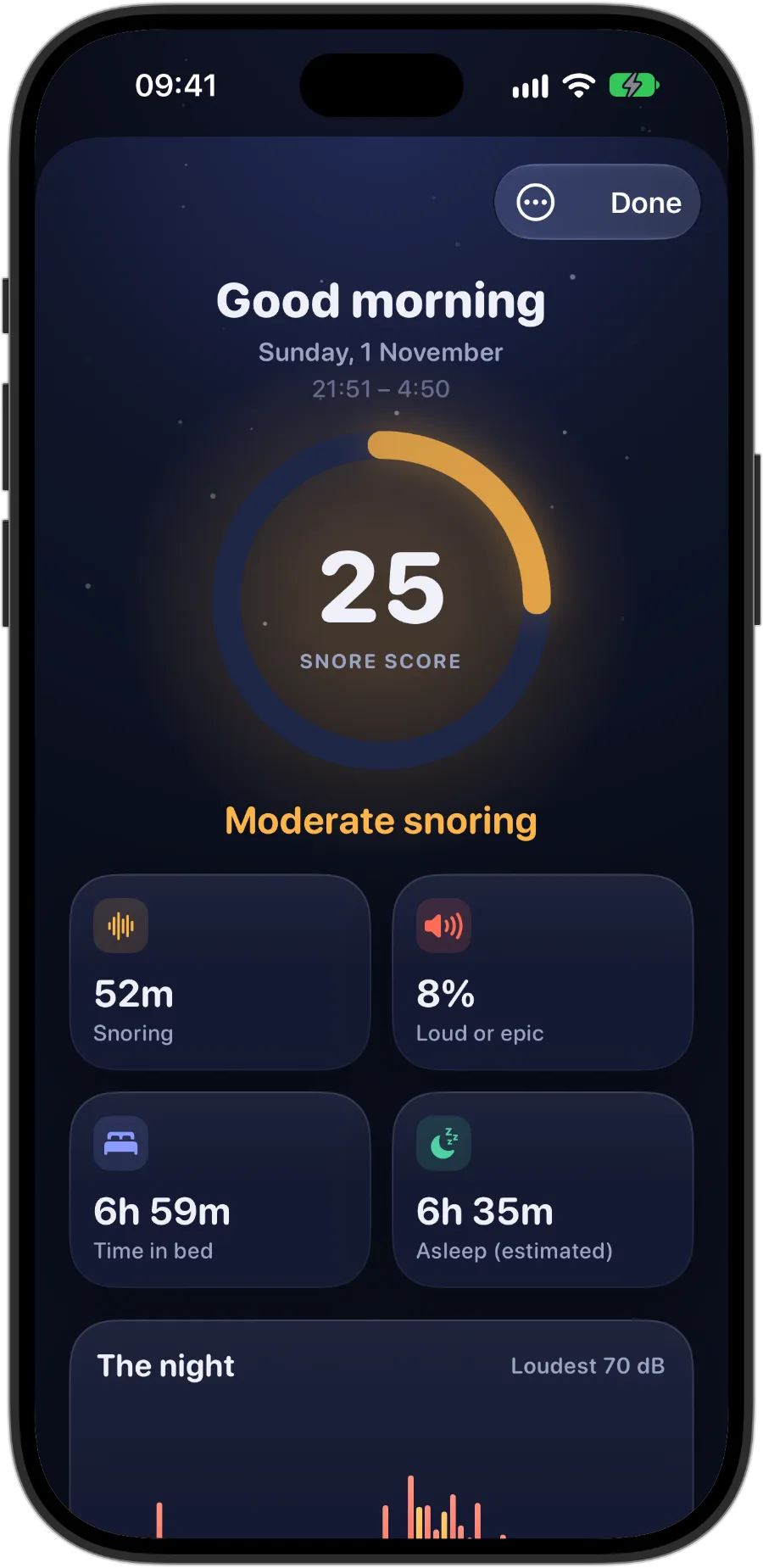
This page is general information, not medical advice. Snores is not a medical device and does not diagnose sleep apnea or any other condition. If you are worried about your sleep or your breathing, talk to a doctor.