
SNORING
Snoring in pregnancy
Why so many women start snoring in pregnancy, when to mention it, and gentle ways to sleep more quietly.
Why pregnancy brings snoring
- A stuffy nose. Pregnancy hormones make the lining of the nose swell, so many women feel congested for months.
- Weight gain, including around the neck.
- Pressure on the lungs from the growing baby, which makes breathing shallower when lying down.
- Sleep apnea becomes more common. In 105 women tested in the first and third trimesters, the share with obstructive sleep apnea rose from 10.5% to 26.7% 2.
Why it matters
Key study
New snoring and blood pressure in pregnancy
- 1,719 women
- Third trimester
- Michigan, USA
Women in their third trimester were asked about snoring and when it had started, and their medical records were checked for complications. 34% snored, and 25% had started during the pregnancy. After accounting for other risks, snoring that began in pregnancy, but not snoring that predated it, was linked with about 2.4 times the odds of gestational hypertension and 1.6 times the odds of preeclampsia. It wasn't linked with gestational diabetes.
Sleep tests point the same way. In 3,705 women in their first pregnancy, sleep-disordered breathing in early and mid pregnancy was linked with about twice the odds of preeclampsia 3. These studies show links rather than proof that snoring causes the problems, but they are why it is worth telling your midwife or doctor about new or loud snoring.
Gentle ways to snore less
What helps
- Sleep on your side. Many midwives already recommend side sleeping in later pregnancy, and it often quiets snoring too 4. A pregnancy pillow behind your back or between your knees helps you stay there. See side sleeping.
- Raise your upper body a little with a wedge pillow. See raising the head of the bed.
- Clear your nose with saline sprays or rinses, which are drug-free, and try nasal strips.
- Keep the bedroom cool and dust-free, and consider a humidifier if the air is dry.
- Ask before using medicines, including decongestant sprays and antihistamines.
After the birth
For many women, snoring settles in the weeks after the baby is born as swelling and weight come down. If it doesn't, or you're very tired beyond what a newborn explains, mention it at your postnatal check.
Is it normal to start snoring when pregnant?
Yes, it's common, especially later in pregnancy: a quarter of women in one study started snoring during their pregnancy 1. It's still worth mentioning to your midwife or doctor.
Is snoring in pregnancy dangerous?
Snoring that starts in pregnancy has been linked with high blood pressure and preeclampsia 1, so it should be checked, but it doesn't mean anything is wrong.
When does pregnancy snoring start?
It can start at any point, but it is most common in the third trimester, when sleep apnea also becomes more common 2.
Do nasal strips work in pregnancy?
They're drug-free and can help if a stuffy nose is the cause. Check with your midwife or pharmacist if you're unsure.
Sources
- O'Brien LM, Bullough AS, Owusu JT, et al. Pregnancy-onset habitual snoring, gestational hypertension, and preeclampsia: prospective cohort study. Am J Obstet Gynecol. 2012;207(6):487.e1-487.e9. doi.org/10.1016/j.ajog.2012.08.034
- Pien GW, Pack AI, Jackson N, et al. Risk factors for sleep-disordered breathing in pregnancy. Thorax. 2014;69(4):371-377. doi.org/10.1136/thoraxjnl-2012-202718
- Facco FL, Parker CB, Reddy UM, et al. Association between sleep-disordered breathing and hypertensive disorders of pregnancy and gestational diabetes mellitus. Obstet Gynecol. 2017;129(1):31-41. doi.org/10.1097/AOG.0000000000001805
- Nakano H, Ikeda T, Hayashi M, Ohshima E, Onizuka A. Effects of body position on snoring in apneic and nonapneic snorers. Sleep. 2003;26(2):169-172. doi.org/10.1093/sleep/26.2.169
COMING SOON
Snore less.
Find what works.
Snores measures your snoring every night, suggests which remedies to try, guides a few minutes of throat exercises a day and shows which changes go with quieter nights for you. The sound stays on your iPhone.
Meet Snores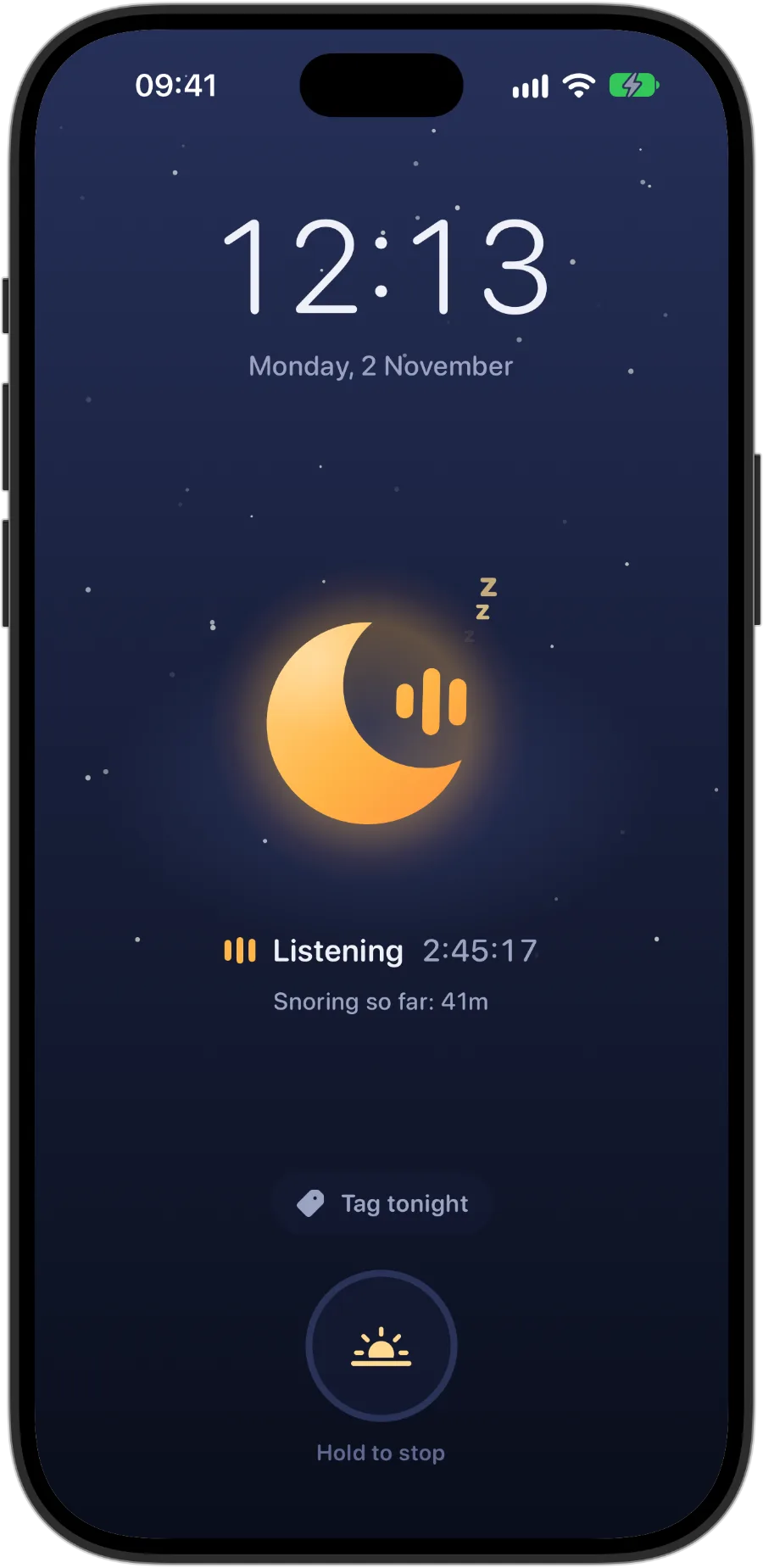
This page is general information, not medical advice. Snores is not a medical device and does not diagnose sleep apnea or any other condition. If you are worried about your sleep or your breathing, talk to a doctor.