
REMEDIES
Singing and wind instruments for snoring
A more musical way to train the same muscles as throat exercises. The evidence is small but encouraging.
Why it might work
Singing and playing a wind instrument work the soft palate, tongue and throat, the same muscles that relax and vibrate when you snore. The idea is the same as with mouth and throat exercises: better tone keeps the airway more open at night. Throat exercises have the larger body of evidence 3.
What the research found
Key study
Didgeridoo lessons for snoring and sleep apnea
- 25 adults
- Moderate sleep apnea and snoring
- 4 months
Adults who snored and had moderate sleep apnea were randomly assigned to didgeridoo lessons and daily practice or to a waiting list. They practised about 25 minutes a day, almost six days a week. Compared with the waiting list, daytime sleepiness improved, breathing events fell by about six an hour, and partners rated their sleep disturbance 2.8 points lower on a 0 to 10 scale.
In a pilot study of 20 chronic snorers, the length of snoring was recorded for a week before and after three months of daily singing exercises. Snoring was reduced on average, most in those who did the exercises accurately and consistently, weren't overweight, had no nasal problems and had only started snoring in middle age 1.
How to practise
Getting started
- Singing: warm up, then sing scales on open vowels, “ah” and “ee”, making the back of the mouth lift. Aim for about 20 minutes a day, as in the study 1.
- Wind instruments: the didgeridoo uses circular breathing, which a teacher can help you learn. Other wind instruments haven't been studied for snoring.
- Combine with throat exercises if you prefer something shorter on busy days.
- Keep going for months, and compare your snoring as you go.
Does singing stop snoring?
It reduced snoring on average in a small pilot study 1. It's unlikely to stop it completely on its own.
Does playing the didgeridoo help snoring?
In a small randomized trial, it improved daytime sleepiness and partners' sleep in people with snoring and moderate sleep apnea 2.
How long does singing take to help snoring?
In the study, people practised 20 minutes a day for three months 1.
Is singing better than throat exercises?
Throat exercises have more research behind them 3. Singing is a good alternative if you enjoy it.
Sources
- Ojay A, Ernst E. Can singing exercises reduce snoring? A pilot study. Complement Ther Med. 2000;8(3):151-156. doi.org/10.1054/ctim.2000.0376
- Puhan MA, Suarez A, Lo Cascio C, et al. Didgeridoo playing as alternative treatment for obstructive sleep apnoea syndrome: randomised controlled trial. BMJ. 2006;332(7536):266-270. doi.org/10.1136/bmj.38705.470590.55
- Camacho M, Guilleminault C, Wei JM, et al. Oropharyngeal and tongue exercises (myofunctional therapy) for snoring: a systematic review and meta-analysis. Eur Arch Otorhinolaryngol. 2018;275(4):849-855. doi.org/10.1007/s00405-017-4848-5
COMING SOON
Snore less.
Find what works.
Snores measures your snoring every night, suggests which remedies to try, guides a few minutes of throat exercises a day and shows which changes go with quieter nights for you. The sound stays on your iPhone.
Meet Snores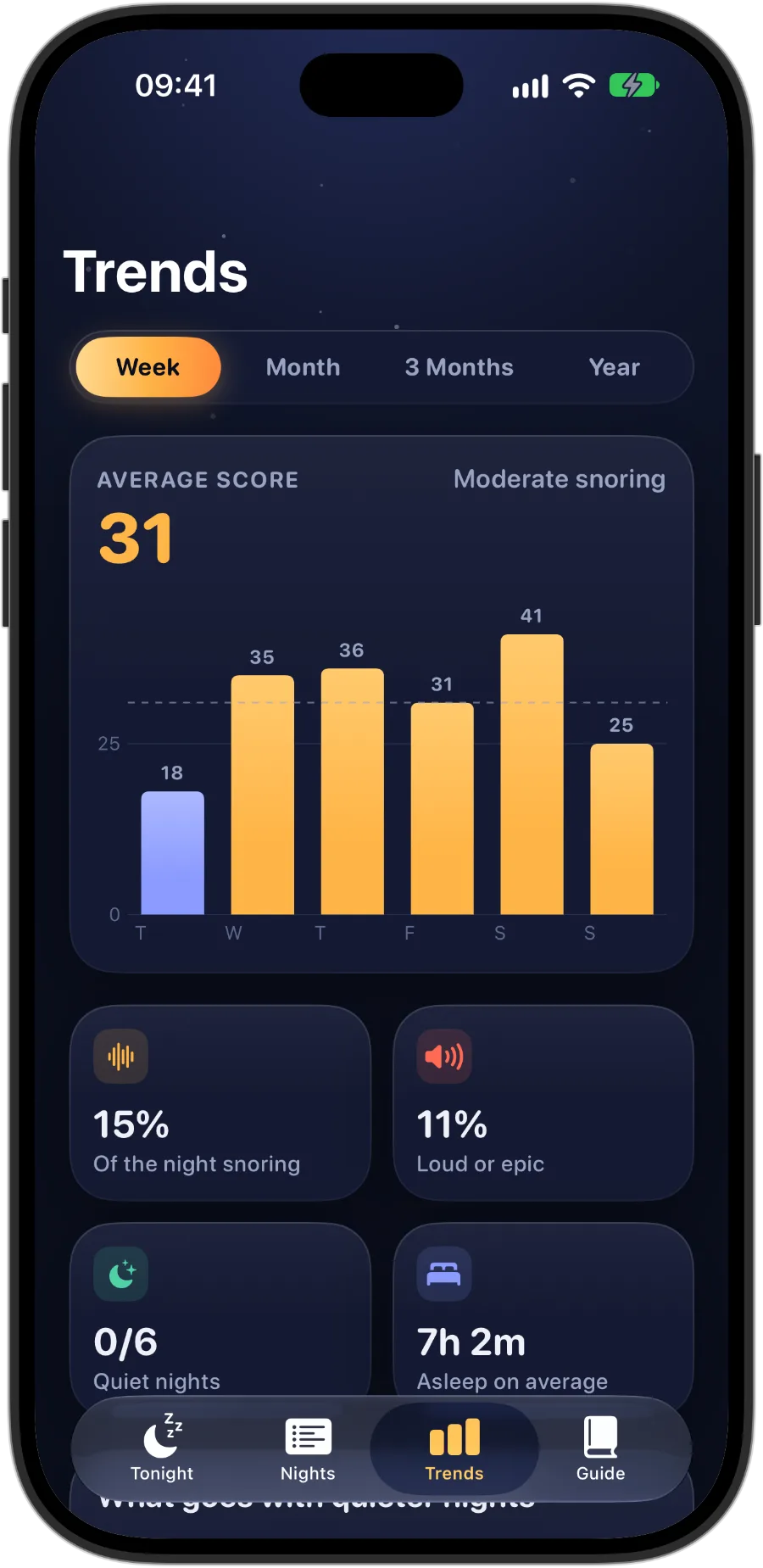
This page is general information, not medical advice. Snores is not a medical device and does not diagnose sleep apnea or any other condition. If you are worried about your sleep or your breathing, talk to a doctor.